

2026 BAC Fellows
The 11th Annual Binational Artwalk · November 13–14, 2026
11th Annual Binational Artwalk
For the first time in the Artwalk’s history, Border Arts Corridor will award prizes to participating artists and performers.
Douglas, Arizona
Friday, November 13, 2026
4–9 p.m. (prize winners announced around 8 p.m.)
Grand Theatre, 1139 G Ave, Douglas, AZ
The Douglas night includes art, live performances, food, and vendors at the historic Grand Theatre.
Agua Prieta, Sonora
Saturday, November 14, 2026
4–9 p.m. (prize winners announced around 8 p.m.)
Plan de Agua Prieta Plaza
In Agua Prieta, performances begin at 5 p.m., and the BAC Fellows exhibition is at Museo AP.
The Arturo Escalante and Pedro Teran Prizes
For the first time in the Artwalk’s history, Border Arts Corridor will award prizes to participating artists and performers. BAC will award four $250 prizes: the Arturo Escalante Prize for performers and the Pedro Teran Prize for visual artists, with one of each awarded in Douglas and in Agua Prieta. A jury of three from Douglas and Agua Prieta will select the winners. Winners will be announced at the end of the performances each evening, around 8 p.m.
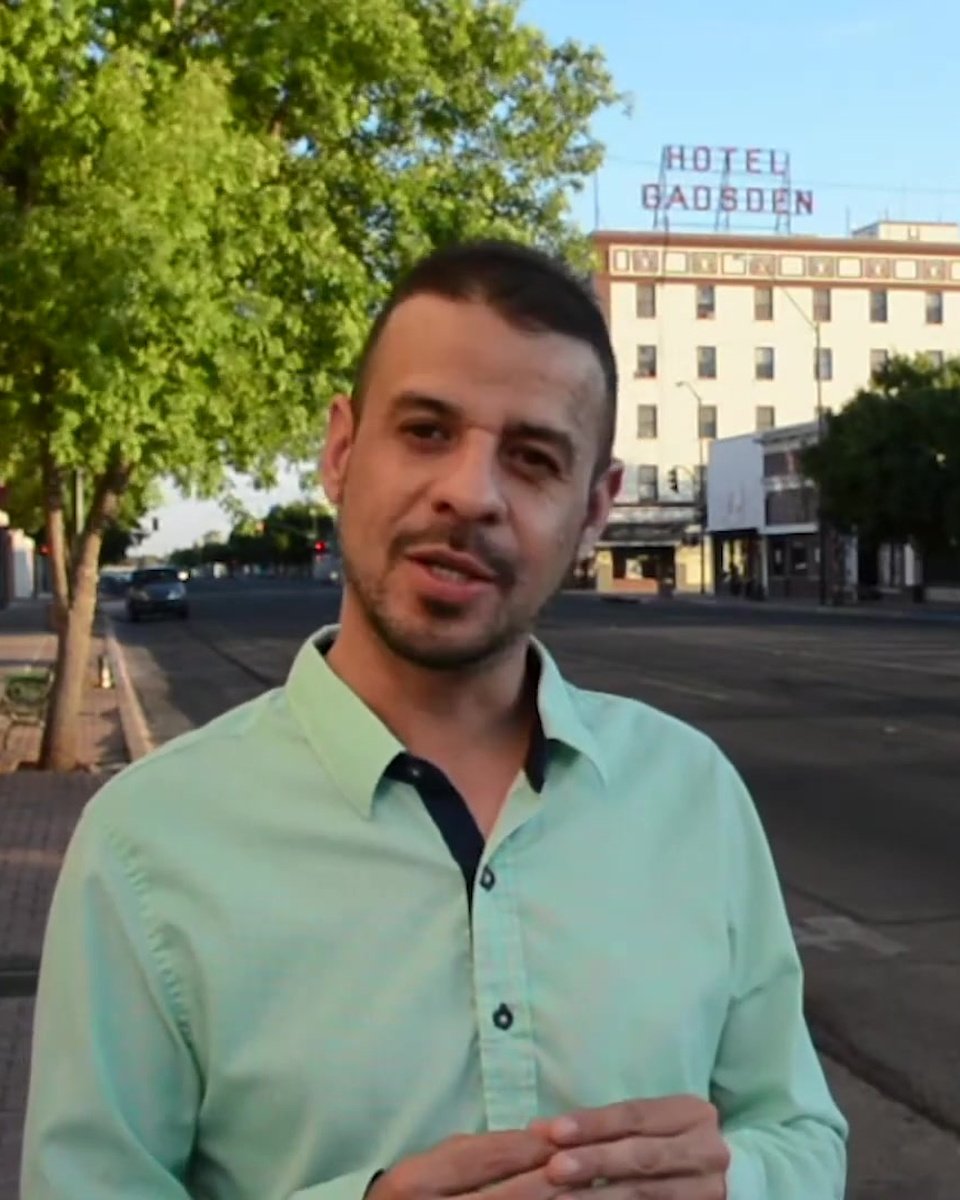
Arturo Escalante
Arturo Escalante Prize for performers
Arturo Escalante was president of the Douglas Arts and Humanities Association, the organization BAC operates under today, when BAC first began its work. He helped lay the foundation for a decade of arts programming in Douglas. He was also a founder and director of Sun Magazine, a bilingual publication serving Arizona and the Sonora borderlands, and a member of the Douglas team for the Arizona Commission on the Arts Creative Communities Institute, the program that produced the public art project Reframing Douglas. Escalante died in 2019. A journalism and photography scholarship in Douglas has been awarded in his name.
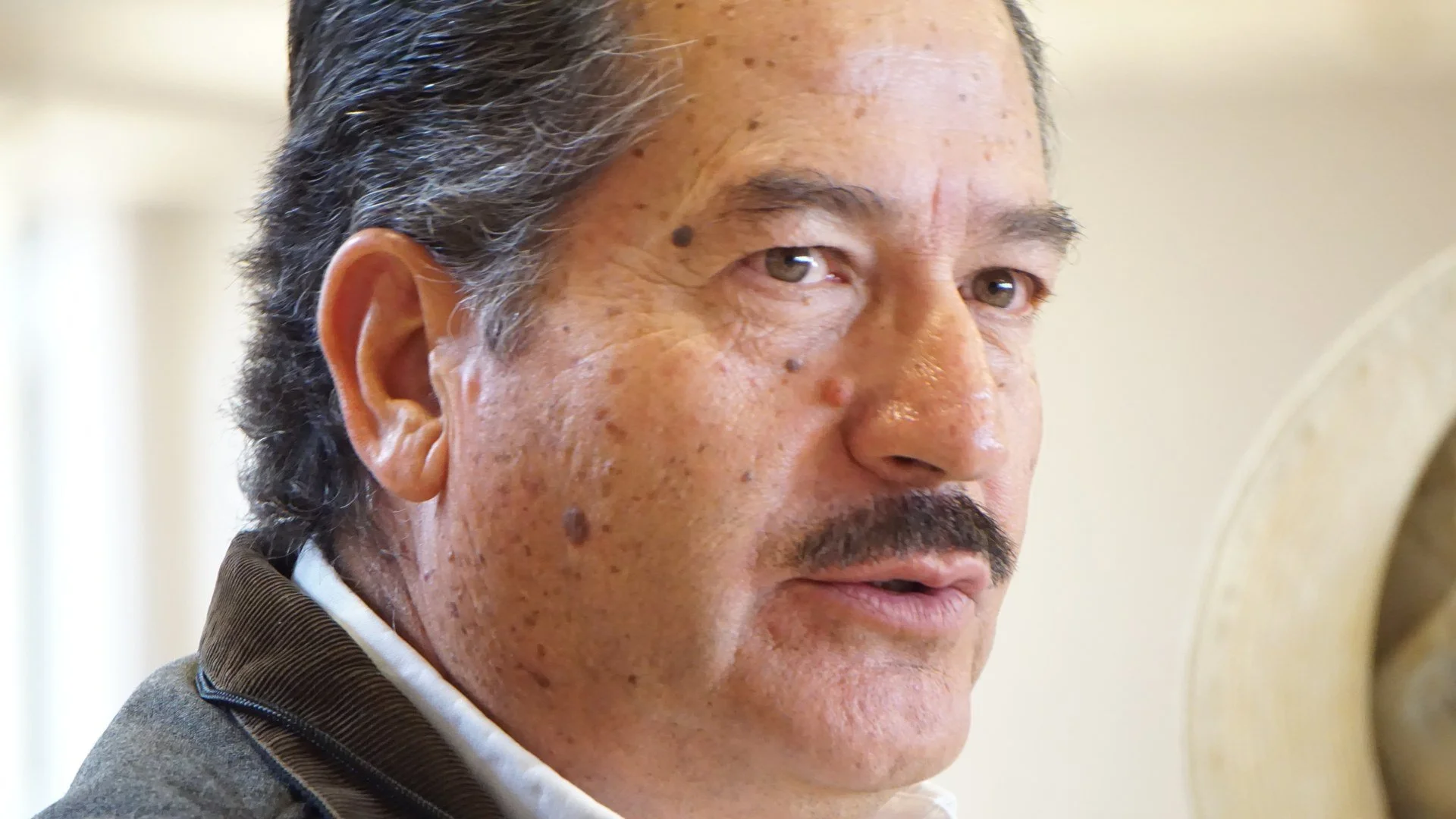
Pedro Teran
Pedro Teran Prize for visual artists
Pedro Teran (José Pedro Terán), owner of El Arteran Designs, was a steady champion of BAC and of young artists in Douglas. He worked alongside BAC on Reframing Douglas, a public art project created through the Arizona Commission on the Arts Creative Communities Institute, and each year he supported dozens of artists as an educator.
About the Fellowship
The BAC Fellowship is a ten-month program by Border Arts Corridor supporting artists whose lives and creative practices are shaped by the U.S.–Mexico border. Through research, workshops, and community engagement, fellows explore histories of migration, social justice, cultural identity, and the borderlands. The program fosters artistic development, collaboration, and authentic storytelling, encouraging artists to challenge dominant border narratives and create meaningful work that reflects and amplifies the voices, histories, and experiences of communities along the border.
This fall, fellows worked in pairs: Fernando and Frida (textiles and poetry), Yadira and Meme (body painting), and Diego and Eduardo (photography and sound).
The 2026 Fellows
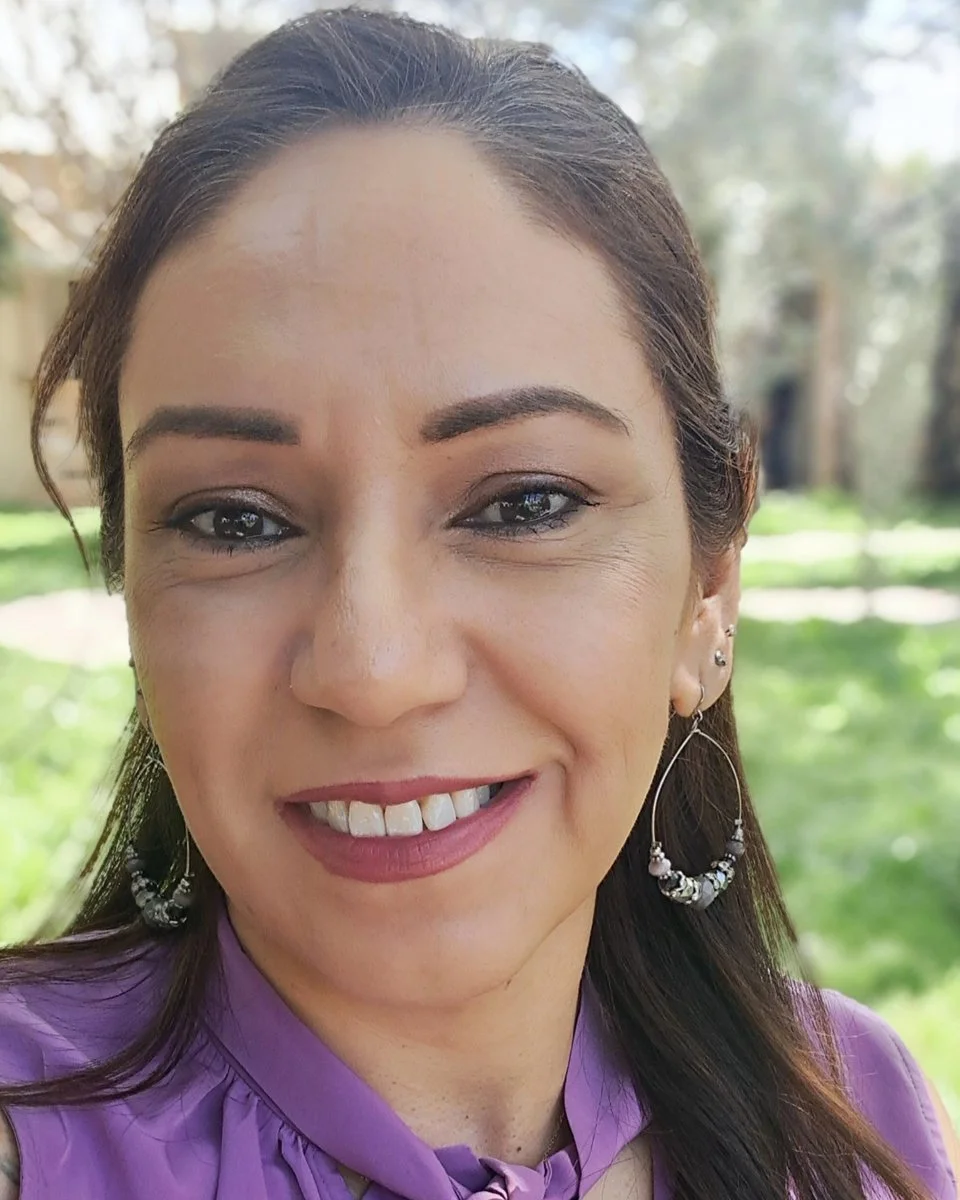
Yadira Camacho Villa
Agua Prieta, SON
Yadira Camacho Villa is a lawyer and self-taught artist from Agua Prieta, Sonora. Through her business, YaDiArtes, she transforms canvases, wood, clothing, and everyday objects into works of art. She has exhibited in Mexico and Arizona, including Entre el Valor y el Miedo and En la Piel de la Frontera. A winner of a statewide competition organized by El Imparcial, she also teaches painting workshops. Her work explores migration, pain, and resilience, inspired by her experiences of the border.
Featured work at the Artwalk: To be announced.
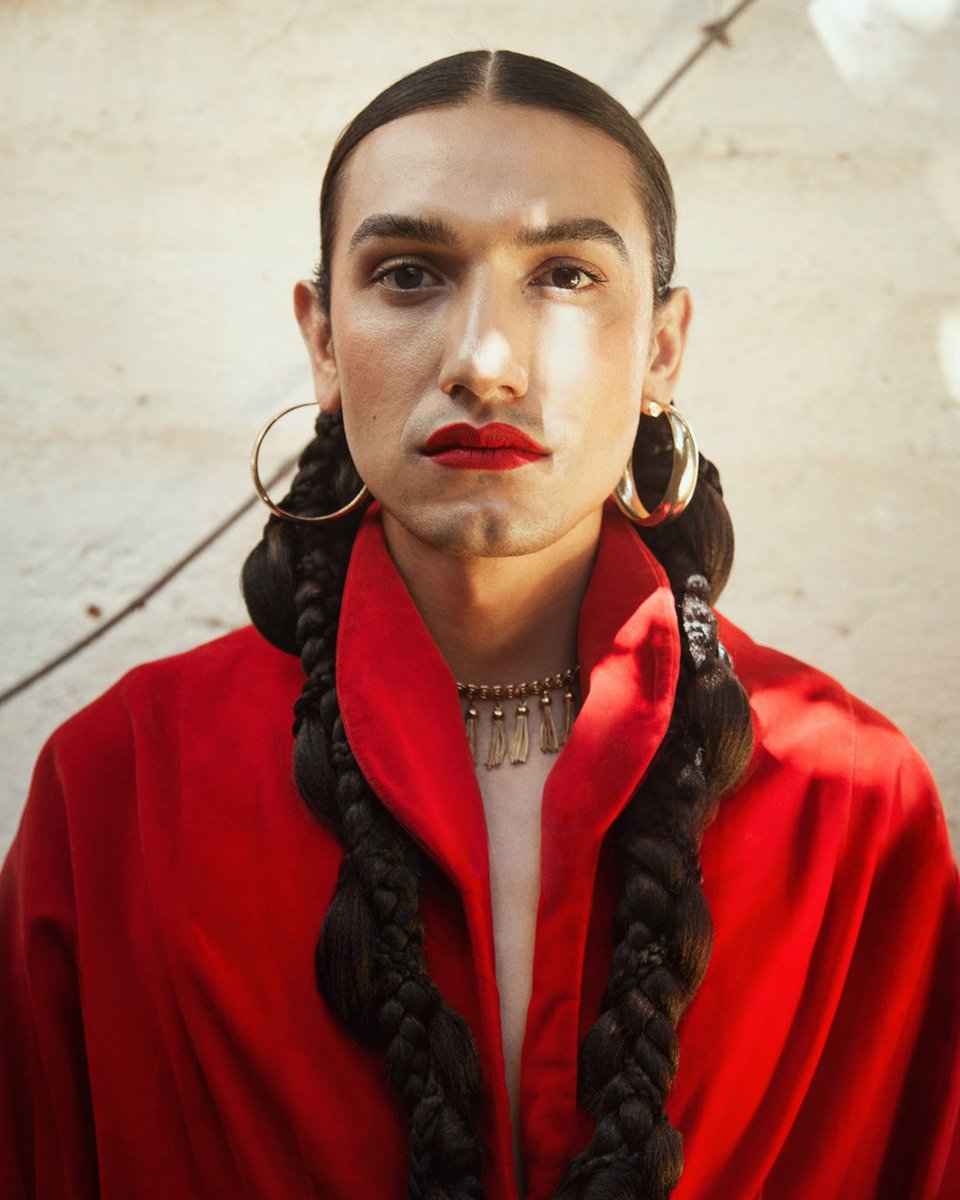
Fernando Serrano
Bisbee, AZ
Emmanuel Fernando Serrano is a queer Mexican-American multidisciplinary artist, weaver, and educator from Naco, Sonora, raised in the Arizona borderlands. His work spans fiber arts, photography, ceramics, printmaking, and metalsmithing, exploring migration, border culture, and textile traditions. He founded Border Loomers, offering free weaving workshops on both sides of the border, and serves as Studio Coordinator at Cochise College. His work was recently acquired for Mexican President Claudia Sheinbaum’s private collection, and he co-produced bord•er•line in Bisbee.
Featured work at the Artwalk: tra•ma, 2026, made with Mylar emergency blankets, muslin, memory foam, agave stalk, and metal clips, 6′ × 9′.
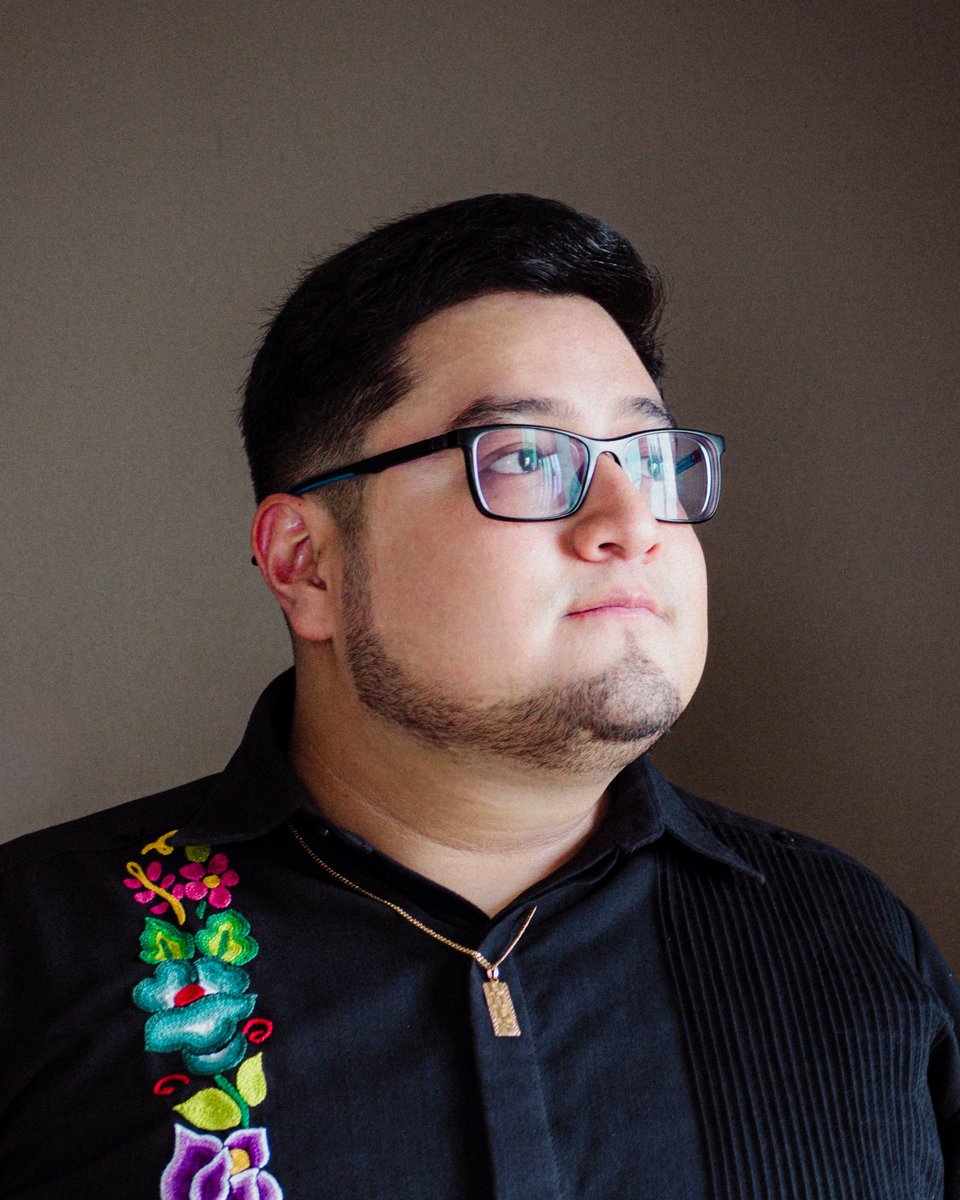
Diego López
Agua Prieta, SON
Diego López is a self-taught photographer from Agua Prieta, Sonora, whose introspective practice translates thoughts, emotions, and personal experiences into images. Shaped by migration, distance, and shifting identities, his perspective is rooted in life along the U.S.–Mexico border. Through reflection and experimentation, López uses photography to explore the relationship between internal and external realities. Each image captures a particular state of mind, offering a space to process experience, examine identity, and make sense of the world around him.
Featured work at the Artwalk: the 2026 photo series Raíces (1, 2), with Extensión de Raíces prints and Cuidando y Guiando, photography on canvas and prints.
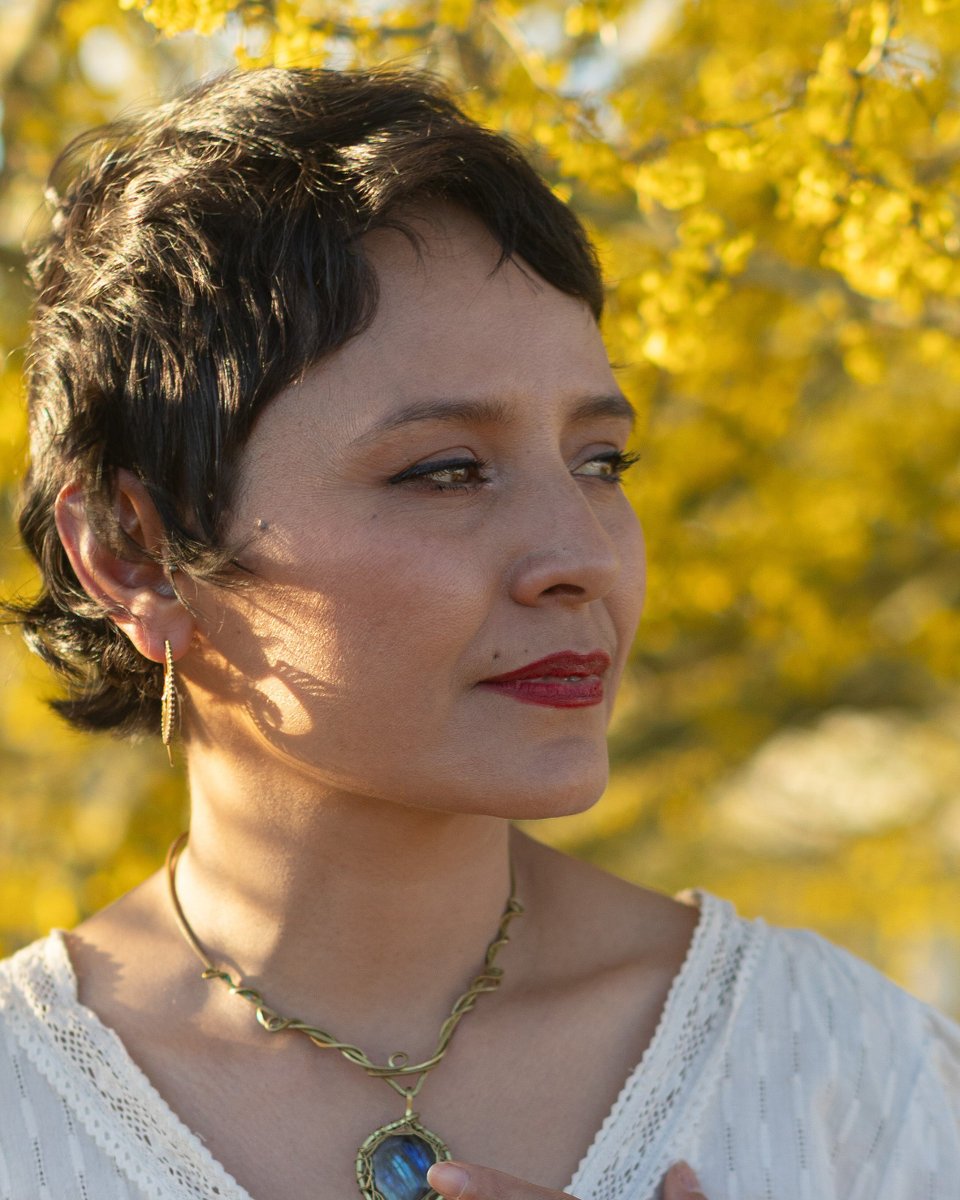
Meme García
Hermosillo, SON
Meme García holds a bachelor’s degree in Arts (Theater) and is a performing artist and makeup designer with an international career. She has worked on 18 feature films, including Apocalypto (Mel Gibson) and Backyard (Carlos Carrera), and made her debut at Palacio de Bellas Artes in the opera La Leyenda de Rudel. A teacher and lecturer, she has taught at Tec de Monterrey and the University of Sonora, which she represented at the 20th Encuentro RET in Bogotá, Colombia. She directs her independent label for theatrical makeup and artistic training.
Featured work at the Artwalk: Habitando la Línea (2026), a collaborative body-paint project titled El No Lugar, in which five Agua Prieta–Douglas border residents—Farith López, Martina Rendón, Irma Mora, Lilián Calleja, and Jhovanna Arriquivez—learned artistic makeup from scratch, sharing their stories and identity symbols to reflect on what it means to inhabit the border line and how identity takes shape in this “no-territory.” Model: Ammi Robles. Photographer: Francisco Mireles Rodríguez (“Panco”). Shown in Douglas and Agua Prieta.
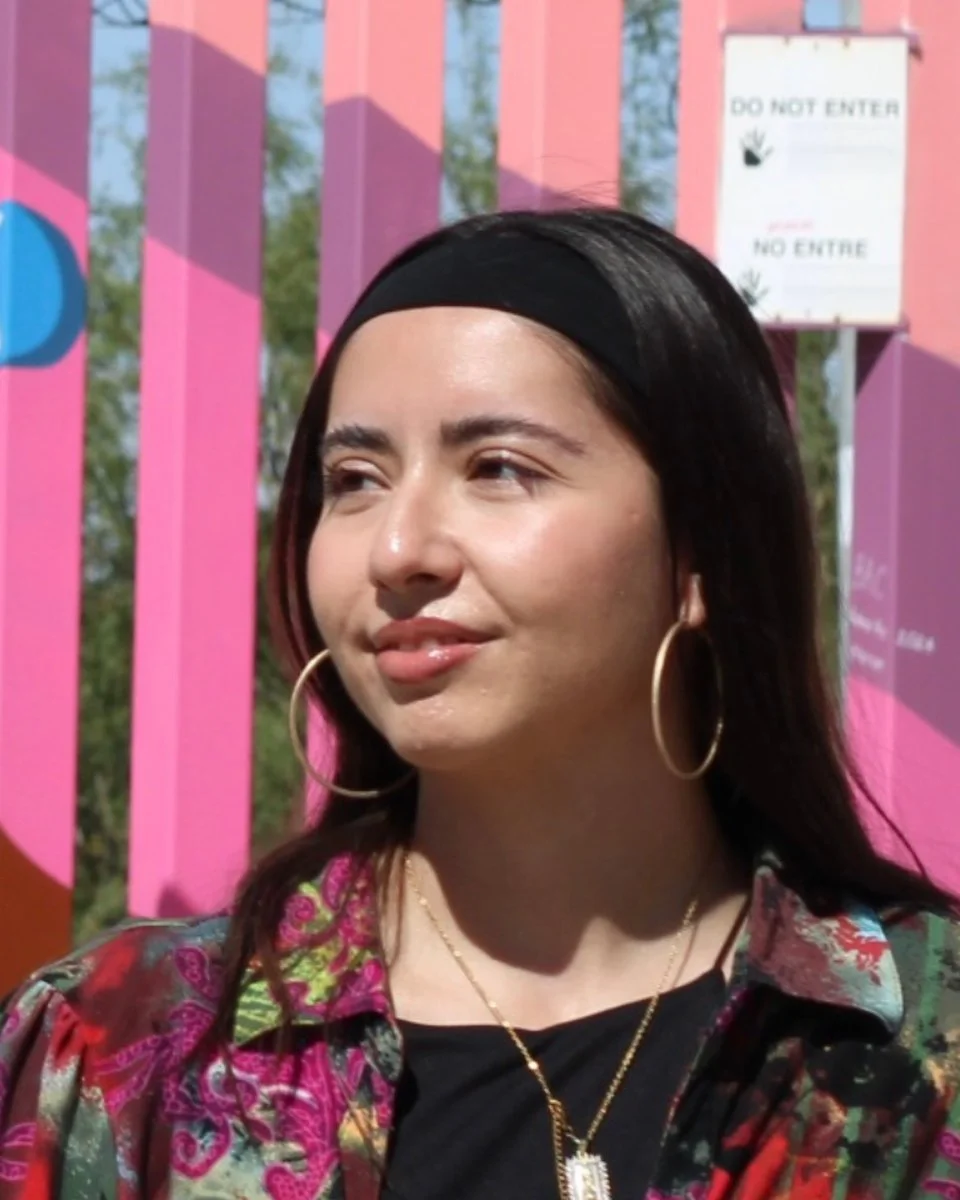
Andrea Pro
Phoenix/Douglas, AZ
Andrea Pro is an artist whose identity is deeply rooted in the Sonoran Desert, specifically Douglas, Arizona, and Agua Prieta, Sonora, where she grew up immersed in Mexican-American culture and border town life. Through bold imagery and various mediums, she explores themes of cultural identity, womanhood, and human connection. Her work often draws on nature as a metaphor for personal growth, embracing the Japanese philosophy of wabi-sabi, which finds beauty in imperfection and impermanence. Her art captures the hidden magic of everyday life.
Featured work at the Artwalk: Ofrenda #1–#3, acrylic and embroidery on canvas, 2026, showing in Douglas. In these works, the sun, desert wildlife, and landscapes appear as symbols she sees as roots connecting her to her culture.
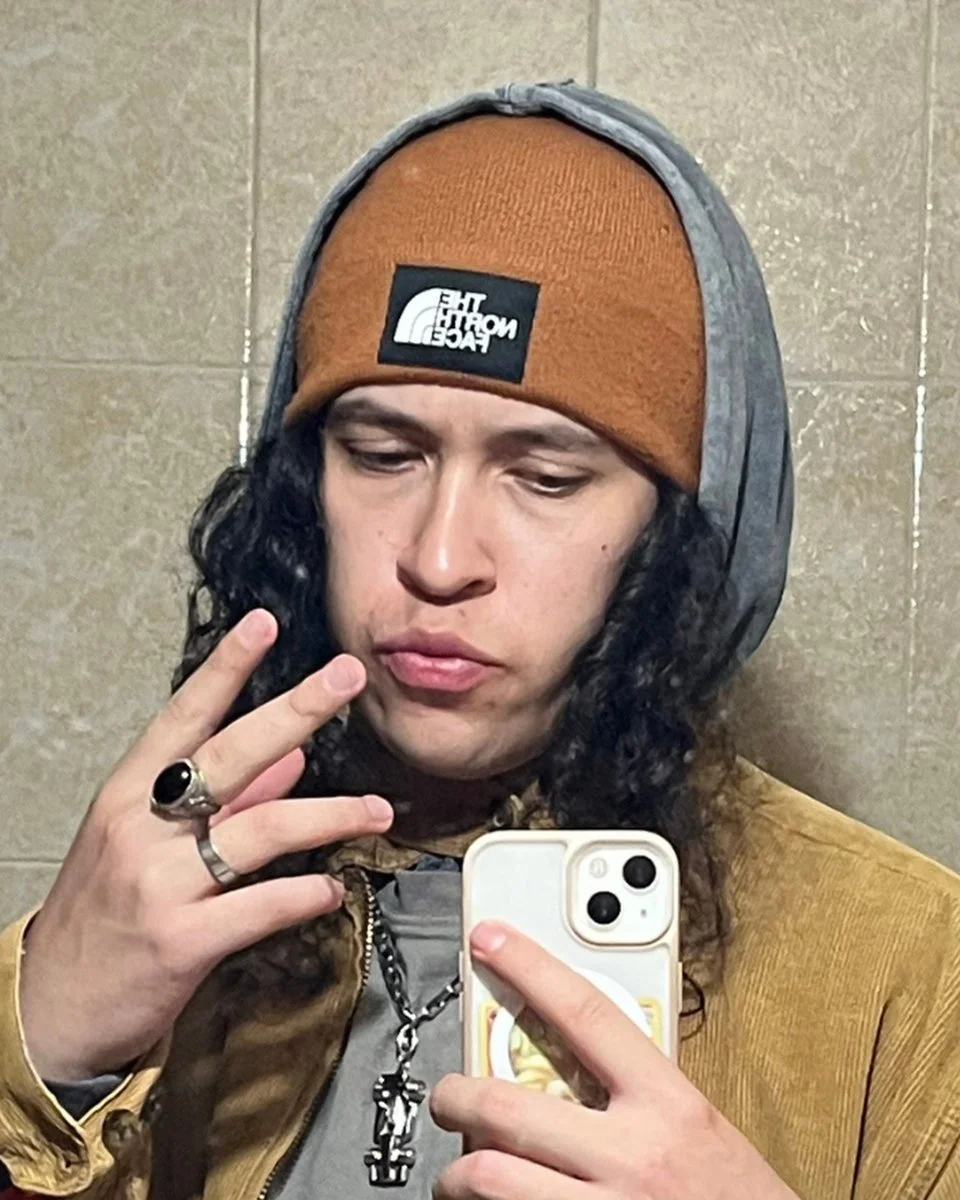
Eduardo Salcido
Agua Prieta, SON
Eduardo Salcido is a musician, producer, and interdisciplinary creator with more than 22 years of experience. For the past nine years he has specialized in music production, sound design, and audio engineering. His practice also includes dance, drawing, photography, graphic design, and digital content creation, including video editing and audiovisual storytelling. Through musical, audiovisual, and educational projects, he works to support emerging artists, strengthen local creative networks, and expand access to tools and opportunities.
Featured work at the Artwalk: an audiovisual work, 2026.
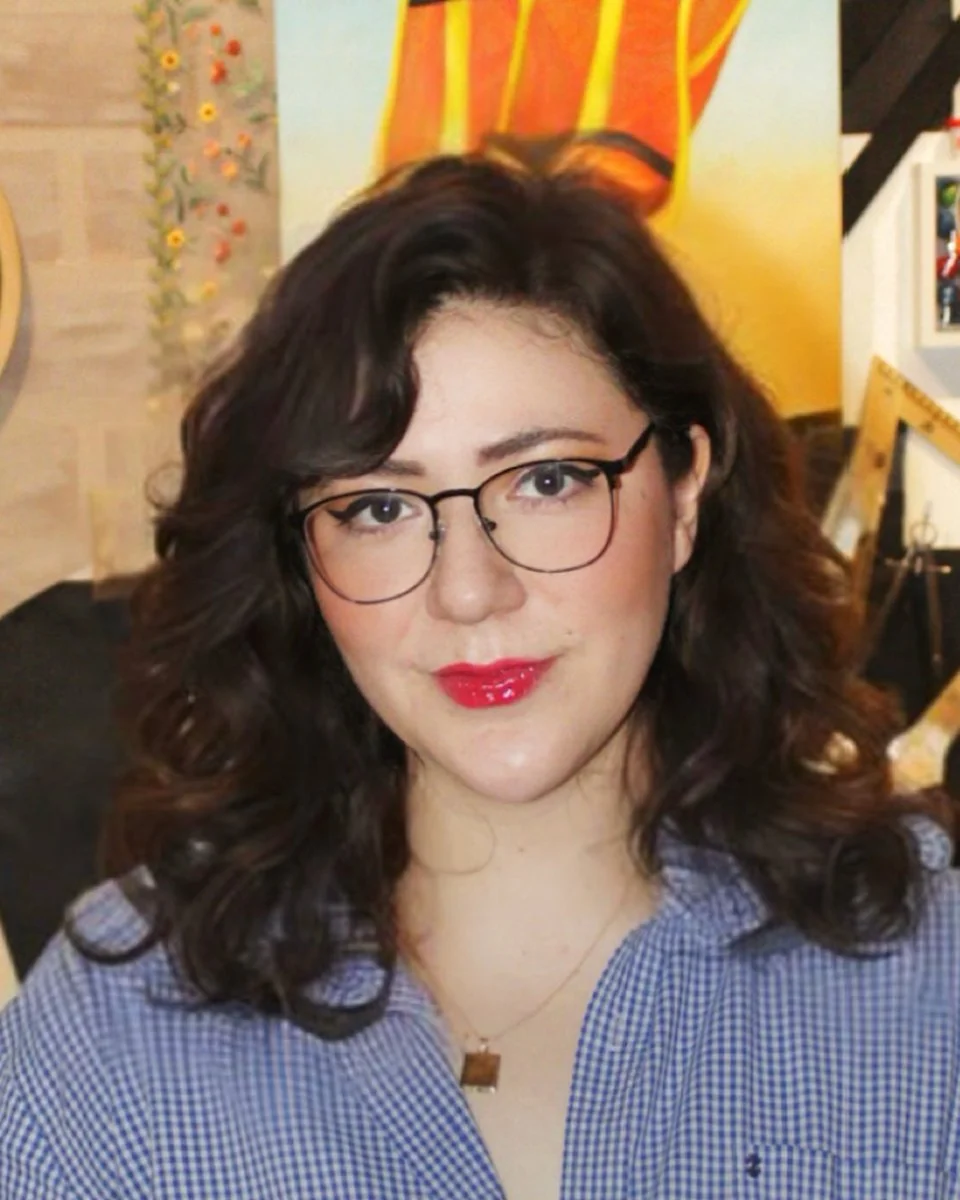
Vanessa Saavedra
Tucson, AZ
Vanessa Saavedra (b. 1997, Jalisco, Mexico) is a Mexican artist and educator raised in Nogales, Sonora, along the U.S.–Mexico border. She earned her MFA in Painting and Drawing from the University of Arizona in 2025, where she currently teaches as an Adjunct Professor of 2D. She has exhibited in the U.S. and internationally, with recent exhibitions including Son de Allá, Son de Acá at the Chicano Park Museum (San Diego, CA), Ya Hecho: Readymade in the Borderlands at the Tucson Museum of Art, and Re-Imagine at the Pink Collar Gallery (UK). She also works as the Administrative Assistant at the Louis Carlos Bernal Gallery in Tucson, AZ. Saavedra’s work engages the complex realities of the U.S.–Mexico border, addressing gender-based violence, systemic patriarchy, and the memorialization of lives lost to femicide.
Featured work at the Artwalk: To be announced.
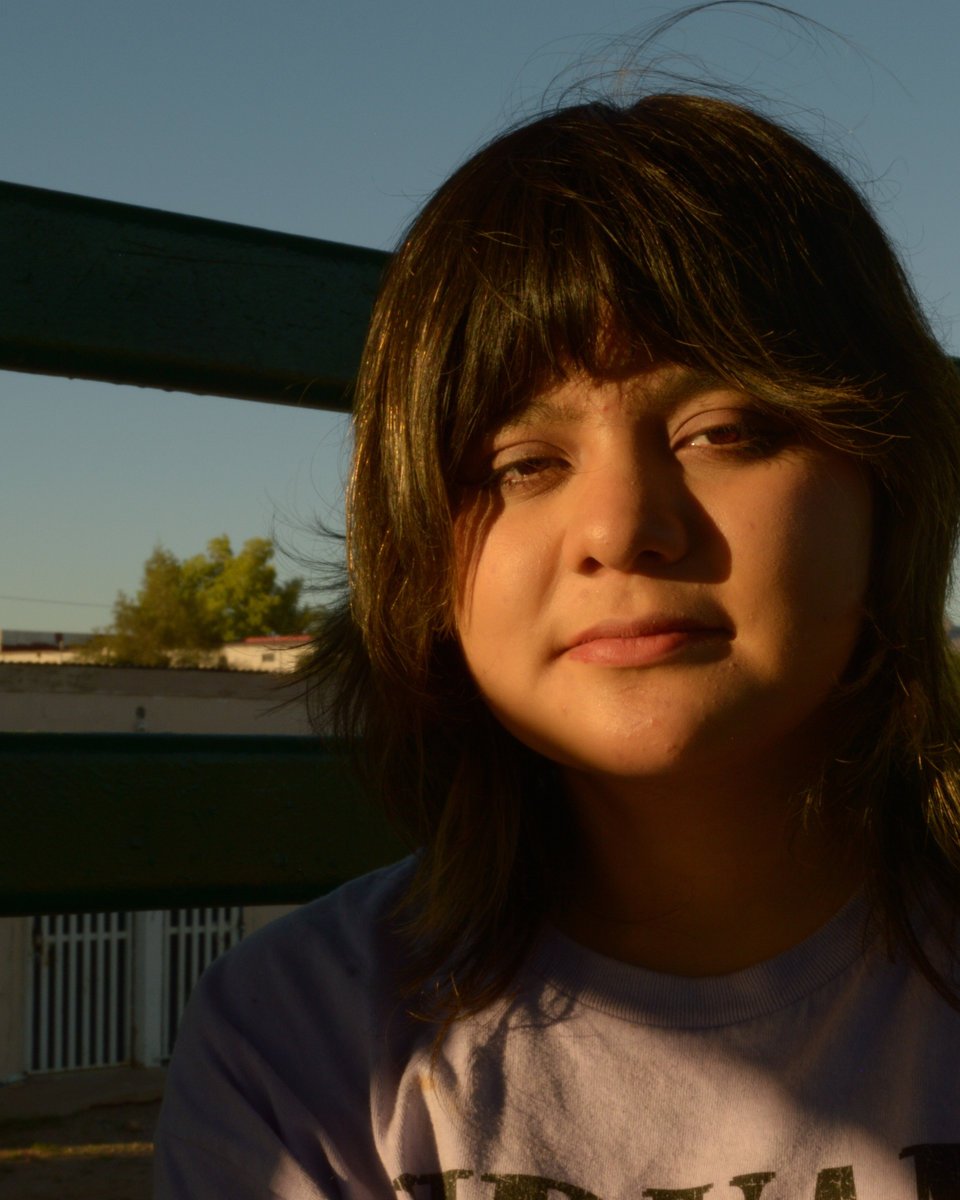
Frida González
Agua Prieta, SON
Frida González is a poet born in Navojoa, Sonora. She grew up among municipalities across Sonora before settling in Agua Prieta, an experience that nourished her creative sensibility. During high school she published her first poetry collection, El amor no es más que el sabor de mil pastillas dentro de tu boca, about adolescence. She took part in the Festival de las Artes Ba’chicui and the Foro de Babel in 2024. She is art director of Retina de Gallo and coordinator of the magazine Toki Toki.
Featured work at the Artwalk: To be announced.
Visiting the Artwalk
Welcome to the borderlands. Whether you’re driving down from Tucson or walking over from across the line, we’re glad you’re here. This guide has what you need to enjoy two nights of art, music, food, and community in Douglas, Arizona, and Agua Prieta, Sonora.
Friday, November 13 · Douglas, AZ · 4–9 p.m.
In front of the historic Grand Theatre, 1139 G Avenue (map). BAC Fellowship Exhibition inside the Grand Theatre, 4–9 p.m. Performances 6–9 p.m. Prize winners announced around 8 p.m.
Saturday, November 14 · Agua Prieta, SON · 4–9 p.m.
Plaza Plan de Agua Prieta, Calles 7 y 8 and Avenidas 16 y 18 (map). Prize winners announced around 8 p.m.
Free and open to everyone.
Before you travel: Border rules, hours, and safety advisories can change. Please check the official sources linked below before you go. This page is a friendly guide, not legal or travel advice. Last checked: November 10, 2026.
Getting here
Douglas sits right on the U.S.–Mexico border in southeastern Arizona’s Cochise County, directly across from Agua Prieta, Sonora.
Nearest airports. Tucson International Airport (TUS) is about 120 miles, roughly 2–2.5 hours by car. Phoenix Sky Harbor (PHX) is about 230 miles, roughly 3.5–4 hours by car.
Driving from Tucson: Take I-10 East to AZ-80 (exit 303), then follow AZ-80 south about 80 miles into Douglas. (Directions from CBP’s Douglas port page)
Time zone tip: Arizona and Sonora are both on Mountain Standard Time all year, so your clock stays the same on both sides of the border.
Parking near the Grand Theatre (Friday): Downtown Douglas has street parking along G Avenue and the nearby side streets, and local listings describe it as free. Part of G Avenue in front of the Grand Theatre will be busy with the Artwalk, so plan to park a block or two away and walk in.
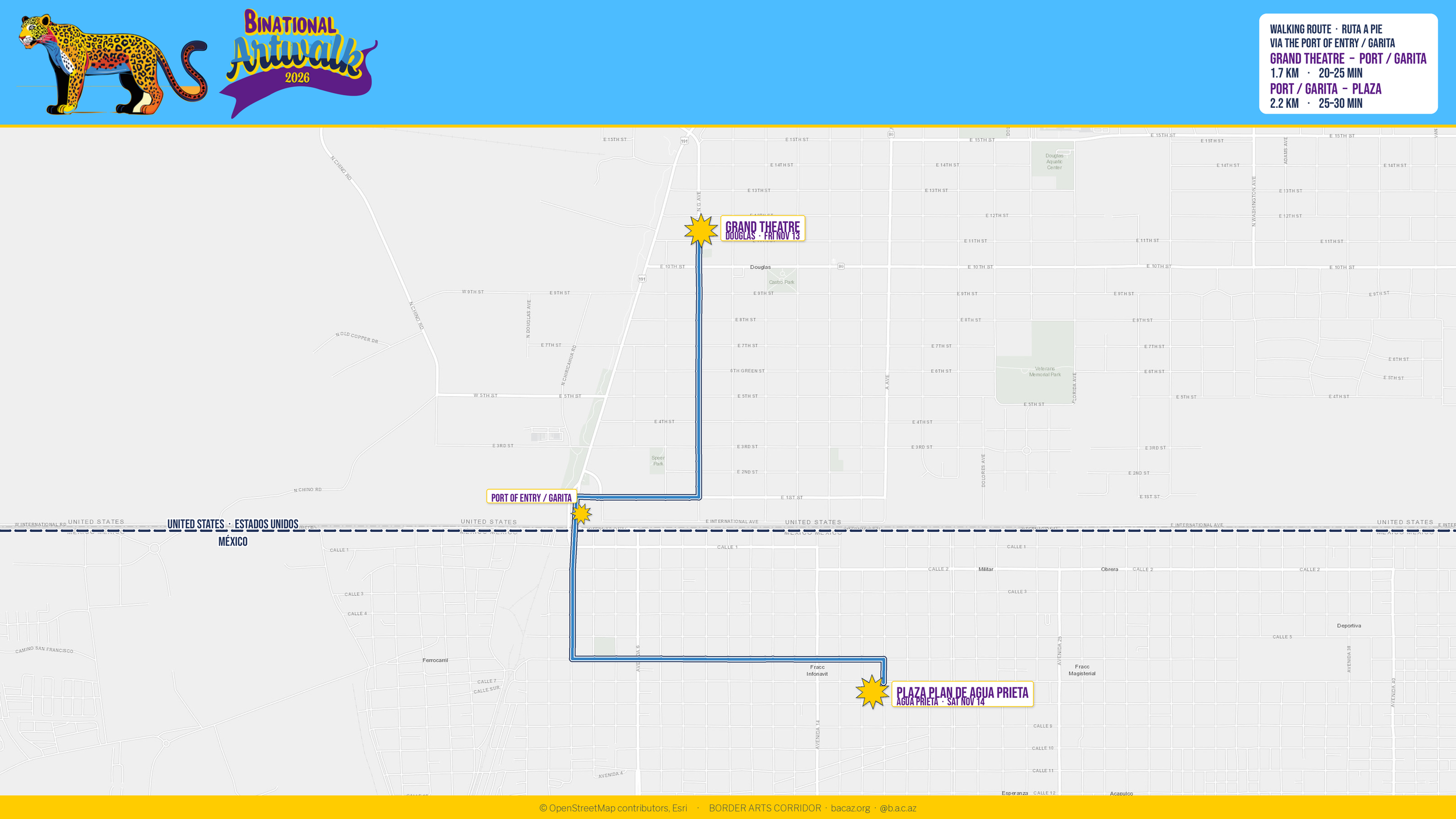
Map of the two sites
Get directions
Crossing to Agua Prieta for Saturday
Saturday’s Artwalk is in Agua Prieta, just across the Raul Hector Castro Port of Entry at the south end of Pan American Avenue in Douglas (map). The port is open 24 hours a day, 7 days a week for passengers (CBP).
Walk or drive?
We recommend walking. The pedestrian crossing is right downtown. CBP’s pedestrian wait coming back into the U.S. is often just a few minutes. Vehicle lines back into the U.S. can run an hour or more on busy evenings. Plaza Plan de Agua Prieta is about 2.2 km (1.4 miles) along city streets from the port, a 25–30 minute walk. (Distance is approximate. Check your map app.)
Check live wait times: CBP Border Wait Times for Douglas (Raul Hector Castro) or the CBP Link app.
What to bring
U.S. citizens (to return to the U.S. by land):
- Adults (16+): a U.S. passport book, passport card, Enhanced Driver’s License, or a Trusted Traveler card (SENTRI, NEXUS, Global Entry). A regular driver’s license alone is not enough.
- Children under 16: a birth certificate (original, photocopy, or certified copy) or another proof of U.S. citizenship is accepted at land borders.
Source: CBP, Western Hemisphere Travel Initiative.
U.S. permanent residents: bring your green card. Visitors from other countries: bring your passport and any visa you need for the U.S. and for Mexico. Make sure you’re allowed to re-enter the U.S. before you cross.
Mexico’s visitor permit (FMM): According to the U.S. Embassy, most visitors entering Mexico by land need a Forma Migratoria Múltiple (FMM), but “travelers staying in a border city for less than 7 days may not be required to present an FMM.” If you plan to go beyond Agua Prieta, or you’re unsure, stop at the Mexican immigration (INM) office at the port and ask. You can also fill out the FMM ahead of time on INM’s official site. Sources: U.S. Embassy, Driving to Mexico · U.S. Embassy, Immigration Enforcement.
If you drive across
- Get Mexican auto insurance. U.S. auto insurance is not valid in Mexico, so you must buy a separate policy. Short-term tourist policies are widely available online.
- No vehicle import permit is needed for the border zone (generally within about 12 miles / 20 km of the border) or the Sonora Free Zone.
- Fill up your tank on the U.S. side.
Source: U.S. Embassy, Driving to Mexico.
Coming back
- Have your documents out and ready before you reach the officer.
- Declare everything you bought. Some foods (like many fresh fruits, vegetables, and meats) can’t come into the U.S. When in doubt, declare it. See CBP: Know Before You Go.
- Don’t carry weapons, ammunition, vapes, or any cannabis into Mexico. Even if it’s legal at home, it is a serious crime there (U.S. Embassy).
Coming from Mexico for Friday in Douglas?
¡Bienvenidos! Mexican citizens visiting Douglas need a valid Border Crossing Card (visa láser) or a passport with a valid U.S. visa. With a Border Crossing Card entering at Douglas, you can generally visit within Arizona up to 75 miles from the border for up to 30 days without an I-94. Source: Federal Register, border zone rules. Check live wait times before you head over: bwt.cbp.gov.
Safety
The U.S. State Department’s travel advisory lists the state of Sonora as Level 3: Reconsider Travel. Agua Prieta is a busy, close-knit border city, and the Artwalk is a community event, but please read the current advisory and make your own choice: travel.state.gov Mexico Travel Advisory. U.S. citizens can sign up for alerts through STEP. In an emergency in Mexico, dial 911.
Where to eat
Prices and hours change, especially on event nights. Call or check before you go. Hours below are as listed online in fall 2026.
Douglas
- The Original Grand Cafe, 1119 G Ave, right next to the Grand Theatre. A Douglas classic for Mexican breakfast, lunch, and early dinner. Listed hours: Mon, Tue, and Thu–Sat 8 a.m.–7 p.m.; closed Wed and Sun. Map · (520) 364-2344
- Saddle & Spur Tavern at the Gadsden Hotel, 1046 G Ave. Classic American plates and cocktails in a 1929 landmark, a block from the Artwalk. Listed hours: Tue–Sat 4–10 p.m. Website · Map · (520) 364-4481
- Chatitas, 301 E 10th St. Steaks, burgers, fajitas, and Mexican plates. Listed hours: Mon–Sat 2–9 p.m., Sun 12–9 p.m. Explore Douglas listing · Map · (520) 364-1144
- Cilantros Bar and Grill, 323 G Ave. Casual food, drinks, and late-night bites, with live music some nights. Open late on weekends. Website · Map · (520) 234-7561
- Asadero El Güero, 569 Pan American Ave, on the way to the border. Mesquite-grilled carne asada and giant burros. Listed hours: Fri–Sat 10:30 a.m.–11 p.m., closed Tue. Explore Douglas listing · Map · (520) 364-6383
- El Rinconcito Del Sabor, 741 F Ave. A local favorite for carne asada burritos and breakfast. Listed hours: daily 7 a.m.–4 p.m. Map · (520) 364-1210
- El Chef Restaurant, 1057 11th St. Southwest and Mexican breakfast and lunch. Listed hours: Tue–Sat 7 a.m.–4 p.m. Explore Douglas listing · Map · (520) 364-5765
Agua Prieta
- Las Flores Restaurant, Calle 5 & Avenida 16, Centro. Steps from Saturday’s Artwalk plaza. Sonoran breakfasts and Mexican plates. Listed hours: Sat 7 a.m.–8 p.m., Sun 7 a.m.–6 p.m.; closed Tue. Map
- El Mago, Calle 6 & Avenida 8, No. 800, Centro. Mesquite carne asada, tacos, and big platters. A favorite for visitors who walk over from Douglas. Listed hours: daily 11:30 a.m.–11:30 p.m. Website · Map
- El Centro Café, Calle 4 No. 461. An Agua Prieta institution for chilaquiles and home-style Sonoran cooking. Listed hours: Fri–Sun 7 a.m.–8:40 p.m. Map
- La Carreta Cafetería, Avenida 6 No. 20. Buffet-style home cooking for breakfast and lunch (menudo, guisados, tamales). Listed hours: Mon–Sat 7 a.m.–3 p.m., Sun 7 a.m.–1 p.m. Map
- La Pérgola, Calle 8 No. 3395, Col. Deportiva (east side, best by car). A rustic, family-run weekend breakfast spot. Listed hours: Sat–Sun 8 a.m.–2 p.m. Reviewers say it’s cash only. Map
Coffee & sweet things
Douglas
- Cafe333 at the Gadsden Hotel, 1046 G Ave. Coffee and pastries in the historic lobby building. Hours differ between listings, so call ahead. Map · (520) 234-6082
- Blueberry Cafe, 600 G Ave. A cozy, family-run spot for coffee, smoothies, pancakes, and paninis. Listed hours: Mon–Fri 8 a.m.–3 p.m., Sat 8 a.m.–2 p.m. Explore Douglas listing · Map · (520) 364-3222
- Maná Restaurant and Bakery, 1030 E 19th St. Bakery, coffee, and early breakfast. Listed hours: Tue–Sun 6 a.m.–12 p.m. Map · (520) 645-0696
- Dunkin’, 199 W 5th St. Open daily 6 a.m.–8 p.m. if you need a quick fix. Store page
Agua Prieta
- Betos Coffee Centro, Calle 6 & Avenida 4. Excellent specialty coffee, mostly to-go. Listed hours: daily 7 a.m.–10 p.m. Instagram · Map
- Bizio Café, Avenida 6 No. 348. A garden café with art everywhere, plus coffee, crepes, lemonades, and Sonoran plates. Listed hours: daily 8 a.m.–10 p.m. Website · Map
- Cornucopia, Calle 6 between Avenidas 31 & 32 (east side). House-roasted coffee, soups, and well-known brownies. Listed hours: Mon–Sat 12–8 p.m. Facebook · Map
Things to see
- The Grand Theatre, 1139 G Ave. Opened in 1919, this was once Douglas’s premier stage, and it’s BAC’s home today. During the Artwalk, step inside for the BAC Fellowship Exhibition. Map
- The Gadsden Hotel, 1046 G Ave. A National Register landmark (first built in 1907 and rebuilt in 1929) with a grand marble lobby. Stop in for a look and a drink. Website
- Douglas Historical Society, Douglas-Williams House, 1001 D Ave. Local history, mining, and border stories. Open Wed–Sat, 12–4 p.m. (so you can catch it Friday before the Artwalk). Website · (520) 364-7370
- Art Car World, 401 E 9th St. A museum of rolling art cars. Open by appointment; call (520) 227-1510 to arrange a visit. Website
- Plaza Plan de Agua Prieta, Calles 7 y 8 & Avenida 16. Saturday’s Artwalk home. Map
- Douglas Visitor Center, 345 E 16th St. Maps and local tips. Call ahead for hours: (520) 417-7354. Explore Douglas
The John Slaughter Ranch Museum east of town is temporarily closed to visitors (slaughterranch.com).
Where to stay
Rooms will go fast on Artwalk weekend, so book early.
- The Gadsden Hotel, 1046 G Ave. Historic hotel a 2-minute walk from the Grand Theatre. Guests must be 21+, no pets, and the elevator is a historic manually operated one. Check-in 3 p.m. Website & booking · (520) 364-4481
- Best Western Douglas Inn & Suites, 199 E 7th St. Breakfast included, with a pool and parking. Website · Map
- Motel 6 Douglas, 111 16th St. A budget option. Website · (520) 364-2457
More options are listed on the City of Douglas lodging page. Historic Bisbee is about a 30-minute drive away if Douglas is full.
Good to know
- Weather: November days are mild (average highs around 70°F), but desert nights get chilly fast. Average lows are in the mid-30s°F. Bring a jacket for the evening. (Source: NWS climate normals via WxDial)
- Money: Bring some cash. Small dollar bills help, and pesos are handy in Agua Prieta. Smaller restaurants and street vendors may be cash only.
- Phones: Check your plan’s Mexico roaming before you cross, or download offline maps.
- Safety basics: Stay in well-lit, busy areas, keep valuables out of sight, cross back while lines are short, and agree on a meeting spot with your group.
- Accessibility: Both Artwalk sites are outdoors on paved streets and plazas.
- Kids & families: Welcome both nights. There will be family-friendly activities.
- Drinks: Alcoholic and non-alcoholic drinks will be sold in Douglas on Friday. Please drink responsibly and bring your ID.
Questions?
Email jenea@bacaz.org or follow us on Instagram @b.a.c.az for day-of updates.
¡Nos vemos en el Artwalk! See you there.
Support this work
The 2026 Binational Artwalk is made possible by our funders and partners — the Andrew W. Mellon Foundation, the Robert Rauschenberg Foundation, the Arizona Commission on the Arts, the City of Douglas, and the City of Agua Prieta — whose ongoing support makes this binational celebration possible.
Border Arts Corridor (BAC) is dedicated to cultivating arts and cultural programming that explores the complexities of the borderlands so that social borders will fall and bridges materialize.